
A tailored session
Positioning and pressure are personal
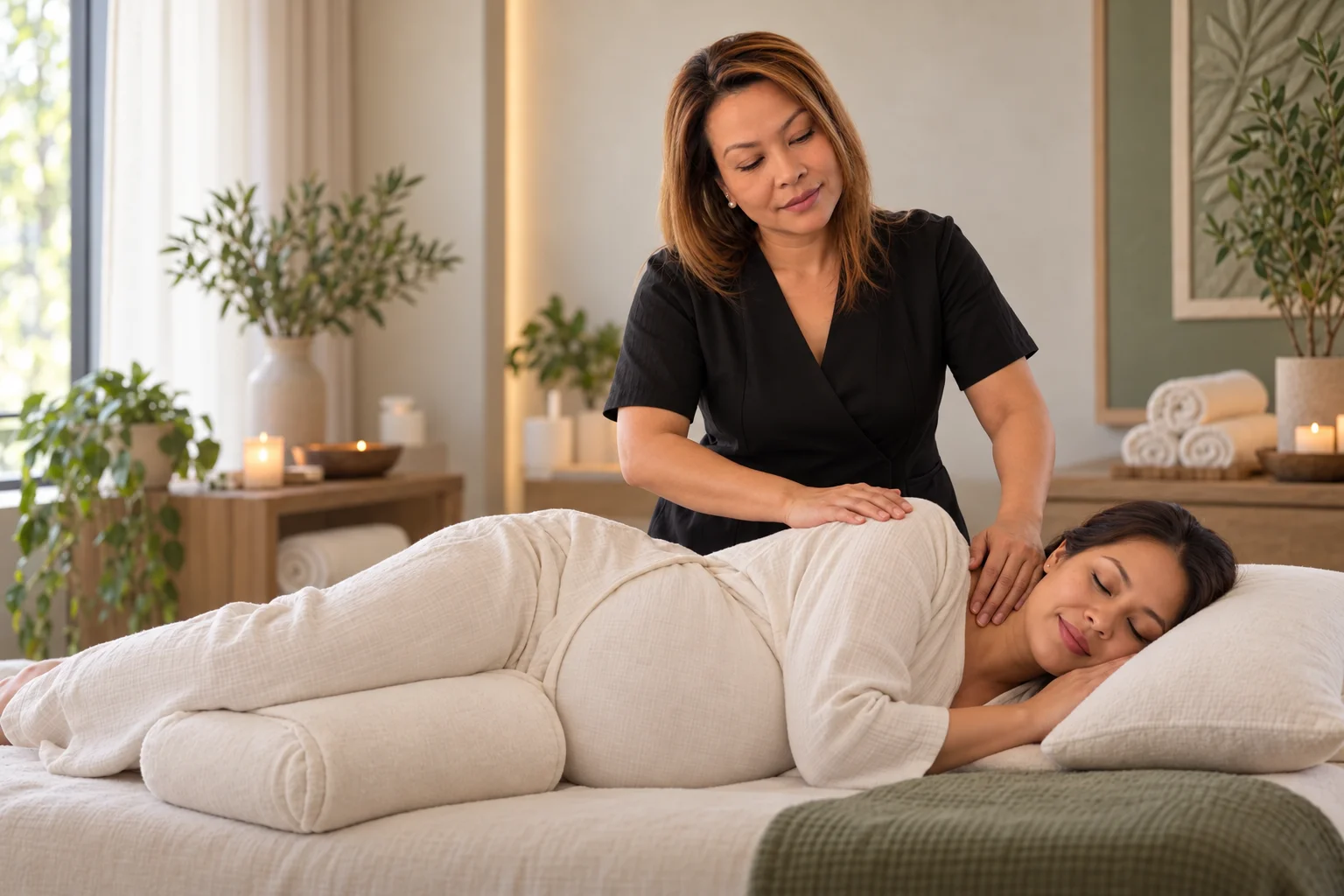
Prenatal massage adapts a massage session to the needs and comfort of someone who is pregnant. Positioning may be side-lying with cushions or another comfortable supported position. The therapist can use gentle pressure and make adjustments as needed. Before scheduling, share how far along you are and discuss any concerns with your pregnancy care provider, particularly if your pregnancy has complications or you have been advised to avoid certain activities.
You can request changes
The room setup, pillows, temperature, pressure, and position can all affect comfort. Tell the therapist if you would like to shift, add support, pause, or change the plan.
There is no pressure target
Pregnancy does not make stronger pressure more helpful. A session can focus on relaxation and comfort, with pressure and areas of focus chosen together.
What evidence can say
Keep wellness claims measured
Research reviews have explored massage during pregnancy, including possible effects on anxiety and depression. One review included eight studies and a later review included 12 randomized trials; these findings do not guarantee an individual outcome, and some studies excluded people with pregnancy complications. [1] [2] Prenatal massage is not prenatal medical care and cannot promise a pregnancy or birth outcome. Ask your own care provider whether massage is appropriate for your circumstances.
Use massage as supportive care
If your provider says massage is appropriate, share any instructions with the therapist. The session can be adapted around your comfort, and you can stop at any time.
Contact your provider about symptoms
Massage is not a way to evaluate new, severe, or worrying symptoms. Follow your care team's advice about symptoms and treatment, and postpone a session when you need medical guidance.
A sample visit
Ask questions before you get comfortable
Imagine an expectant guest who has never had a prenatal massage. Before booking, they ask how the session is positioned and explain that lying flat is uncomfortable. After confirming with their care provider, they request supportive side-lying positioning and light pressure. During the visit, the therapist checks that cushions feel supportive and makes room for a position change. This is an illustrative scenario, not a real client's experience or testimonial.
Share the information that matters
Tell the therapist your stage of pregnancy, preferred position, and any guidance from your care provider. You do not need to share private details beyond what is relevant to comfort and safety.
Set a pace that feels easy
You can ask what to expect, keep conversation minimal or ongoing, and change your mind during the session. Comfort can shift from one day to another.
Request an appointment
Plan around the guidance you have received
Sabai Dee Massage is appointment-only and serves Arlington, Grand Prairie, and Mansfield. Location details are shared after confirmation; mobile service is available by request. Prenatal Massage rates are $110 for 60 minutes, $165 for 90 minutes, or $220 for 120 minutes. Sansanee James is a Texas Licensed Massage Therapist (MT131837). A brief consultation with your pregnancy care provider is a helpful step before scheduling, especially if you have any pregnancy-related concerns. The massage is offered for wellness and comfort, not diagnosis or treatment.
Ask before choosing a duration
Consider your comfort and schedule, and ask any questions you have about positioning or pacing when you request availability. The plan can account for your preferences.
Include provider guidance
When requesting an appointment, share any relevant restrictions or positioning preferences your care provider has discussed with you. The therapist can then confirm whether the requested session is appropriate.