
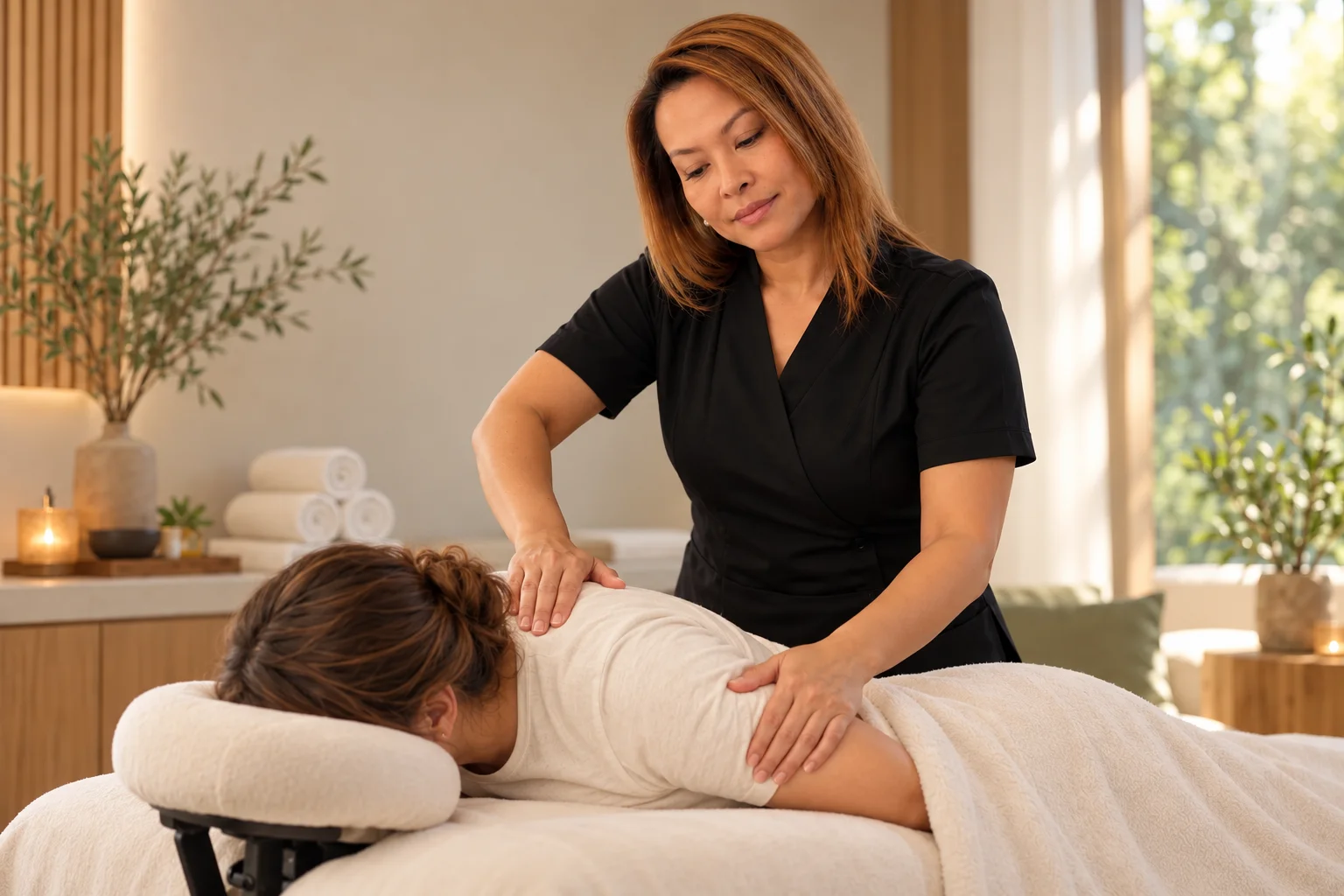
A customizable style
One session can include more than one approach
Thai Combination describes a personalized massage that can blend Thai-inspired pressure or assisted movement with flowing massage techniques. The balance is not a fixed recipe: it is discussed with the therapist and shaped around what feels comfortable. Some guests may want more time with still, focused work; others may enjoy gentle movement as part of the session. Let your therapist know what you have in mind before beginning.
Start with a preference, not a perfect label
You might say, “I am curious about Thai massage, but I would like to stay mostly still,” or “I enjoy broad strokes and would like to try a little assisted movement.” That is enough to help guide the conversation.
There is room to adjust
The session can change as you go. Pressure can be lighter or firmer, a movement can be skipped, and attention can shift to another area. Clear check-ins help you stay involved in the choices.
Why people choose it
A middle path for different comfort needs
Guests may choose this style because they appreciate options in one appointment. A blend can feel less structured than a session devoted to one technique. People sometimes feel calmer or more comfortable after massage, though experiences vary. Research on pain outcomes is limited and does not establish a medical result for a particular blend. Treat this as wellness care, not diagnosis or treatment. [1]
Useful when you are deciding
If you are between Thai and Swedish massage, describe the parts of each that appeal to you. The therapist can explain the session options and help you request a style that matches your comfort level.
The goal is your comfort
Massage should not feel like a test of how much pressure you can tolerate. A comfortable session can include a range of sensations, and you can ask for changes without needing to justify them.
What to expect
A sample conversation makes the plan clearer
Picture a guest who has tried a flowing massage before and wonders whether adding Thai-inspired movement would feel right. They mention a preference for slow pacing and ask to avoid large stretches. The therapist explains the available options, begins with steady pressure, and checks before introducing a gentle movement. The guest decides to keep the rest of the session still. This example is illustrative only; it is not a real client story or testimonial.
Tell the therapist about your day
Share whether you want quiet, a little conversation, or guidance during movements. Mention areas that feel sensitive and any area you would like left alone.
Use simple pressure language
Try “lighter,” “a little more,” or “that is just right.” Your feedback helps the therapist adjust in the moment, and you can pause the session whenever you need.
Before booking
Choose time for the kind of session you want
For this appointment-only practice in Arlington, Grand Prairie, and Mansfield, rates are $110 for 60 minutes, $165 for 90 minutes, and $220 for 120 minutes. The location is provided after your appointment is confirmed; mobile visits can be requested. Sansanee James is a Texas Licensed Massage Therapist (MT131837). If you have a health condition, recent injury, surgery, or other reason to be unsure about massage, consult your healthcare professional before booking. Massage is for general wellness and is not medical diagnosis or treatment.
Pick a length that feels unhurried
A shorter visit can be a simple introduction, while more time allows a slower pace or attention to additional areas. You can ask about current availability when you send your request.
Include details that help
Send the duration you prefer, a few possible appointment times, and which techniques interest you. Add movement or pressure preferences so the therapist can plan an appropriate conversation.