
The approach
Pressure and movement work together
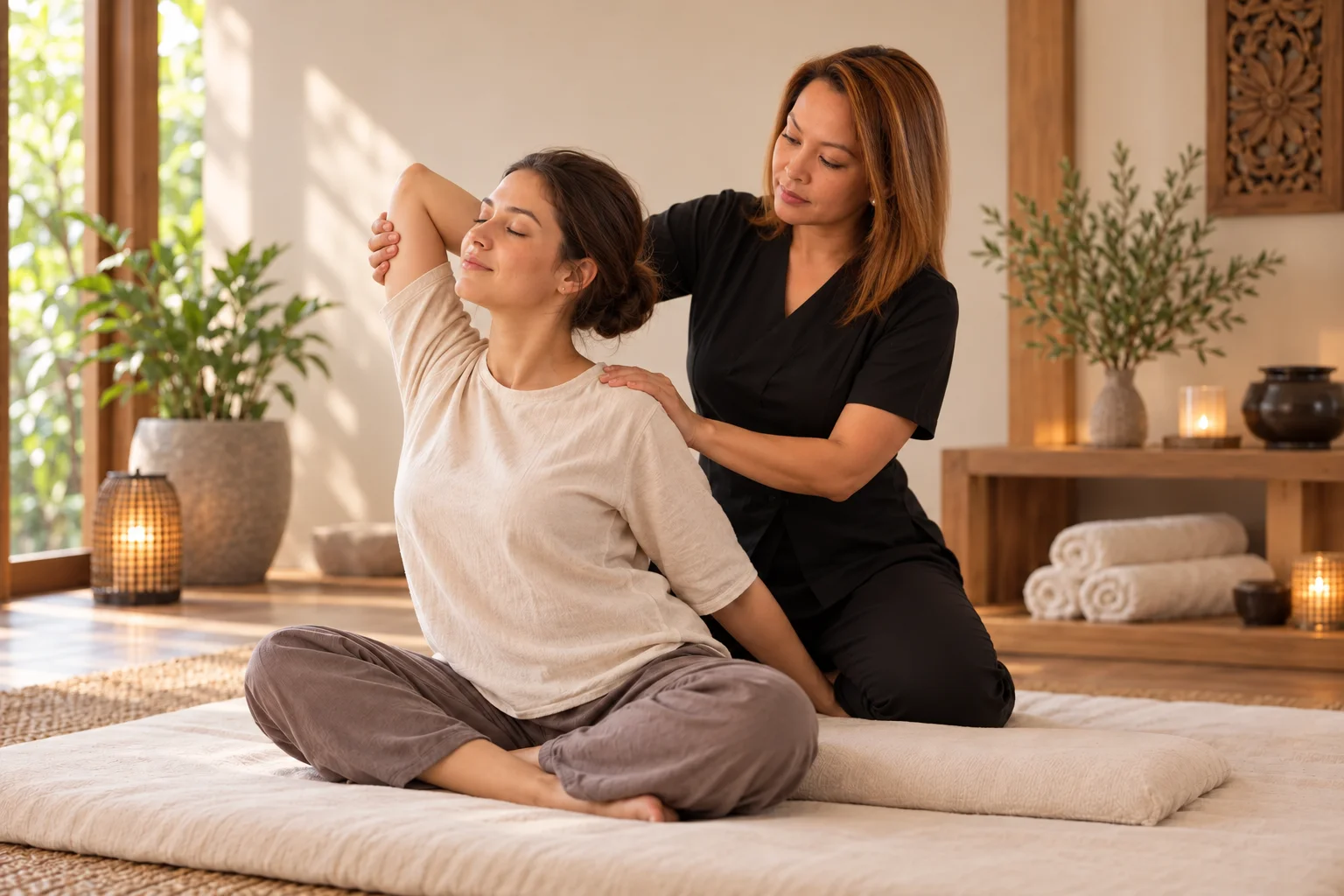
Thai massage is a traditional bodywork style that may include rhythmic pressure, gentle rocking, and assisted stretches. Unlike an oil-based session where you usually remain still, Thai massage can invite small movements with the therapist's support. The approach varies with comfort and mobility. A systematic review of traditional Thai massage for chronic pain found encouraging results in a small body of studies, while noting more rigorous research is needed. [1]
A session is collaborative
Before starting, discuss your focus areas, mobility, injuries, and movements to avoid. Stretches should feel controlled and optional. Ask for a smaller range of motion, pause, or different technique at any time.
Comfort is the guide
Some people enjoy the feeling of being gently moved; others prefer to stay mostly still. Your session can be adapted around that preference. You do not need to be flexible, athletic, or experienced with massage to begin.
Possible benefits
A chance to slow down and notice your body
People often choose Thai massage for movement and focused attention. Some describe feeling relaxed or more at ease afterward, but those are personal experiences, not promised outcomes. Research on massage is mixed; evidence for some pain concerns is limited and benefits may be short term. Massage is not a substitute for care from a health professional. [2]
What you might appreciate
The pace can feel grounding, and guided movement offers a different experience from long gliding strokes. The therapist can focus on areas such as the back, legs, shoulders, or hands, based on your preferences.
What to keep in mind
More stretching or pressure is not automatically better. If you have an injury, recent surgery, a condition affecting bones or joints, or uncertainty about massage, check with your healthcare professional and share relevant guidance before booking.
Before your visit
An example of a comfortable first session
Imagine a first-time guest who spends much of the day at a desk and is curious about Thai massage but wary of deep stretches. They explain that preference at the start. The therapist keeps the movements small, checks in after each change of position, and uses gentle pressure. The guest asks to skip one stretch, and the plan changes without fuss. This is an illustrative scenario, not a client testimonial; it shows the kind of communication that helps make a session personal.
Wear what feels practical
Thai massage is commonly performed with the client clothed in comfortable, flexible clothing. Ask about attire when confirming your appointment, and choose pieces that allow easy movement without feeling restrictive.
Speak up early and often
You can describe pressure as lighter, medium, or firmer and change your mind during the session. Tell the therapist promptly if a stretch feels uncomfortable, sharp, or difficult to breathe through. A wellness session should not require enduring pain.
Choosing a session
Plan a visit that fits your day
Sabai Dee Massage is appointment-only and serves Arlington, Grand Prairie, and Mansfield. The appointment location is shared after confirmation; mobile service is available by request. Sansanee James is a Texas Licensed Massage Therapist, license MT131837. Pricing is $110 for 60 minutes, $165 for 90 minutes, or $220 for 120 minutes. Tell us it is your first Thai massage and mention any movement preferences in your request. Massage supports general wellness and does not diagnose or treat medical conditions.
Keep your first plan simple
If you are unsure how much time to choose, consider your schedule and how long you would enjoy setting aside for a quiet session. You can ask about the experience and available options before confirming.
A useful request
Share your preferred duration, a few possible times, and whether you prefer a mostly still session or are open to assisted movement. This gives the therapist a helpful starting point for planning.